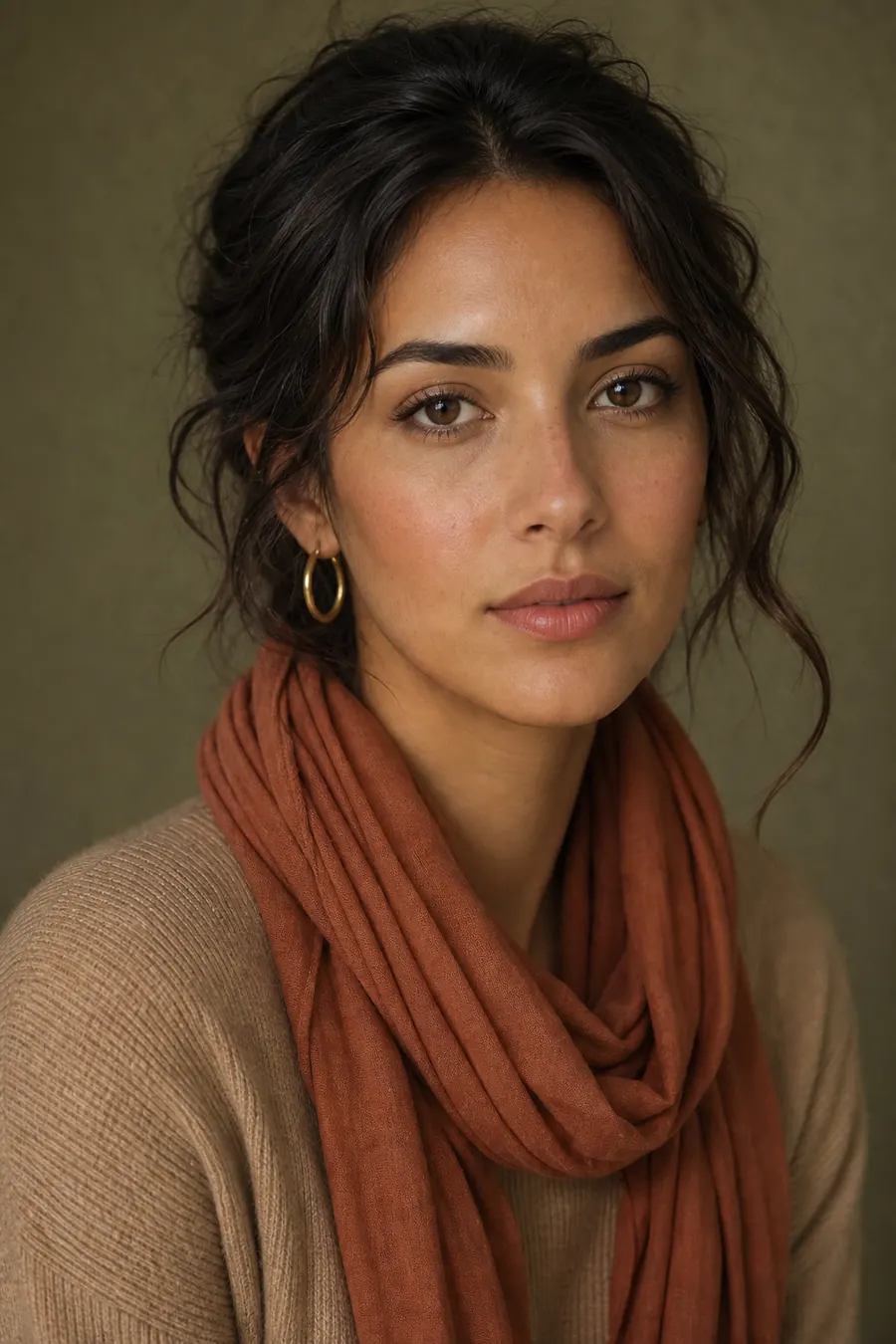
Light Olive
neutral · Fitz II–III
Olive is an undertone, not a depth. A fair face and a deep complexion can both read olive — a muted green or yellow-grey cast that sits under the surface and stays the same when you tan. This olive skin tone chart names five depths of that undertone and pairs each with the seasonal palette that usually flatters it, so you can stop treating “olive” as a single shade.
The Chart
neutral · Fitz II–III
warm · Fitz III
warm · Fitz III–IV
warm · Fitz IV
neutral · Fitz IV–V
On a proper skin tone chart, depth is the row (fair through deep) and undertone is the column (cool, warm, neutral, olive). Search “olive skin tone chart” and many results treat olive as a single medium-tan shade. That is why foundation matching fails: light olive needs a different base than rich olive, even though both have the same green-gold direction. If your jawline looks slightly ashy in peach foundation and slightly muddy in pink foundation, you are usually in the olive column — then pick the depth row that matches you in daylight.
Clothes that sit near the face do the most work. Cream, camel, khaki, forest, rust, and brick make the skin look even. Avoid optical-white tees and baby pink; they bounce a cool pink that fights the olive cast. Gold and bronze metals usually win over bright silver. Lipstick that works is terracotta, brick, or muted berry — not frosted rose. None of this replaces a season result: a Light Olive Soft Autumn and a Deep Olive Deep Winter will still shop different saturations. The chart gets you in the right family; a daylight photo of your face confirms the sub-season.
Light olive (fair, Fitzpatrick II–III) often lands in Soft Autumn or Light Spring — low contrast, muted warmth, ivory over optical white. True olive and warm olive (medium to tan, III–IV) are the classic Soft Autumn and Warm Autumn middle: camel, mustard, olive, and terracotta sit quietly on the skin. Deep and rich olive (IV–V) split by contrast: golden-brown warmth with brown eyes stays in Deep Autumn; near-black hair on olive skin with bright eyes often tips into Deep Winter even though the surface still reads green-gold. If two depths both look plausible in indoor light, recheck the jawline by a north window — depth errors cause more wrong seasons on olive skin than undertone errors. The three-question quiz on this site uses eyes, skin depth, and hair to place that neighborhood before any photo step.
Metal is the fastest undertone test on olive skin because foundation already hides the cast. Yellow gold and bronze usually even olive out; bright silver and optical white usually grey it — unless contrast is high enough for Deep Winter, where silver snaps back. Test both metals flat at the collarbone in daylight, not under shop spots. Lipstick follows the same rule: terracotta, brick, warm rosewood, and muted berry even the mouth because they carry enough warmth and depth; frosted rose, bubblegum pink, and chalky nude fight the green and make the lips look separate from the face. Blush should be peach-terracotta rather than cool pink. Once the metal and the lipstick agree, the three-question color analysis quiz (/quiz) maps the season neighborhood, and a daylight photo — the step the paid Season Palette iOS app is built for — confirms undertone and contrast when Light Olive and Warm Olive still share a drawer.
An olive skin tone means the undertone carries green, yellow-green, or grey-green — whatever the depth. Three signs point to it: foundation in both pink and peach looks slightly off (one muddy, one ashy); veins at the wrist look neither clearly blue nor clearly green; and the jawline looks sallow next to optical white but even next to cream or ivory. Tanning does not remove the cast — it deepens the row while the olive column stays put. If that sounds familiar, compare your depth against the five named shades on this page, then use the parent skin tone chart (/skin-tone-chart) to see how the olive column differs from cool, warm, and neutral at the same depth.
Olive skin colors work when they echo the muted warmth already in the skin: camel, khaki, moss and forest green, mustard, terracotta, rust, brick, deep teal, burgundy, chocolate, and cream. These shades sit quietly and make the face look even. What fights olive skin is anything icy, neon, or stark: optical white, black-and-white contrast, bubblegum pink, icy pastels, and chalky nudes bounce pink or grey back at the face. Between seasons, Soft Autumn and Warm Autumn own most of the middle; Light Olive can borrow from Light Spring and high-contrast Deep Olive from Deep Winter. When in doubt, hold the garment at the jawline in daylight — the right olive skin colors even you out instantly, no blending needed.
Olive undertone makeup starts with a neutral-olive or golden-neutral base, never pink: pink-based foundation turns ashy by afternoon, while overly yellow base looks muddy indoors. Match the jawline in daylight, then set blush to peach-terracotta rather than cool pink and bronzer to a muted golden brown. Lipstick for olive skin follows depth plus warmth — terracotta, brick, warm rosewood, spiced nude, and muted berry flatter nearly every olive depth; frosted rose and blue-pink fight the green cast. For eyes, bronze, copper, khaki, and warm brown define without greying; skip icy silver unless your contrast already reads Winter. Still between two depths? The three-question color analysis quiz (/quiz) narrows the season neighborhood, and a daylight photo — the step the paid Season Palette iOS app is built around — settles undertone and contrast before you buy the bottle.
Warm olive leans golden-green: yellow gold jewelry evens it out, camel and mustard glow, and the likely seasons are Warm Autumn, Soft Autumn, or Deep Autumn. Cool olive leans grey-green: the skin looks almost ashen next to peach, muted berry and deep teal win over orange, and high-contrast cases can land in Deep Winter or Soft Summer edges. Most olive skin sits between the two — neutral olive — which is why metal testing beats guessing: lay yellow gold and brushed silver flat at the collarbone in daylight and pick whichever erases shadows rather than adding them. If gold wins with low contrast, shop Autumn; if silver suddenly snaps on dark hair and bright eyes, check Winter. Either way, confirm with the color analysis quiz (/quiz) and a daylight photo in the paid Season Palette iOS app rather than store lighting.
Answers
Olive is the undertone itself — a green, yellow-green, or grey-green cast. It is not automatically warm. Fair olive can sit next to Light Spring; deep olive often sits in Deep Autumn or Deep Winter. Depth and contrast with hair still decide the season.
Most olive skin glows in muted earth: camel, terracotta, olive, mustard, deep teal, and burgundy. Candy pink, icy pastels, and stark black-and-white contrast usually grey the face out. Soft Autumn and Warm Autumn are the most common palettes; high-contrast olive can still be a Winter.
No. An olive skin color palette is the set of hues that do not fight the green-gold cast — earth, moss, rust, cream. Your color season is narrower: it also uses hair and eye contrast. Two olive people can wear the same camel coat and still need different lipsticks.
Continue Exploring